
Most founders start with the same sentence:
“We only need a simple MVP.”
And it makes sense. You want to move fast, validate the idea, and avoid wasting money.
But in real product development, “simple” MVPs often become expensive — not because teams overcharge, but because complexity shows up where founders don’t expect it: roles, permissions, workflows, billing logic, integrations, and changing priorities.
This guide explains the most common MVP budget traps — and how to build a lean MVP that’s still market-ready.
The Real Reason MVP Costs Blow Up: Scope, Not Code
MVP budgets rarely explode because of “coding difficulties.”
They explode because of unclear scope decisions, like:
-
“Let’s add one more user type”
-
“We need payments now”
-
“We should support a few workflows, not just one”
-
“Can we integrate with HubSpot / Stripe / Slack?”
Each of these adds hidden work:
-
database changes
-
access control rules
-
edge cases
-
testing effort
-
deployment complexity
A useful way to think about MVP cost is this:
Your MVP cost grows with the number of decisions your product must handle.
5 MVP Budget Traps (and What to Do Instead)
1) “Just One More Feature” (Scope Creep)
This is the #1 trap.
The MVP starts with a clear list, then quickly turns into:
-
“Nice to have”
-
“It won’t take long”
-
“Users will need it anyway”
-
“Let’s add it before launch”
And suddenly, your MVP doesn’t ship.
✅ Fix: Use an MVP Feature Gate
Before adding anything, ask:
-
Does this feature enable the core user journey?
-
Does it test the main business assumption?
-
Will it help us learn or make money this month?
If “no” → it’s V2.
2) Adding Too Many User Roles Too Early
Founders often add roles like:
-
admin
-
user
-
client
-
manager
-
partner
-
vendor
-
reviewer
Every role adds:
-
different permissions
-
different dashboards
-
different UI logic
-
different data visibility
It’s one of the fastest ways to increase MVP complexity.
✅ Fix: Keep roles minimal
For most MVPs, these are enough:
-
Admin
-
User
Only add more roles if they’re required by the business model.
3) Payments Are Not “Just a Stripe Integration”
Billing looks simple until you build it.
Even basic subscriptions include:
-
account states (active, trial, canceled)
-
failed payments and retries
-
access rules when payment fails
-
upgrades/downgrades
-
invoices and legal requirements
Payments also increase the expectations around security, stability, and support.
✅ Fix: Start with the simplest billing version
For MVP stage:
-
1 plan
-
no complex discounts
-
no advanced billing logic
-
make “payment + access” predictable
If payments aren’t required for validation, consider launching with:
-
waitlist → manual payment → invoice
or -
paid pilot for a small group
4) Ignoring the Admin Side (Until Operations Become Painful)
Many MVPs fail not because users don’t like the product — but because founders can’t operate it efficiently.
Founders skip admin features and end up managing everything through:
-
spreadsheets
-
manual approvals
-
messy email threads
-
WhatsApp updates
This slows down growth, increases mistakes, and kills focus.
✅ Fix: Build a lightweight admin panel
A simple admin panel can be minimal but extremely valuable:
-
user list
-
ability to edit key records
-
status changes (approved / rejected)
-
export to CSV
It’s one of the best ROI MVP components.
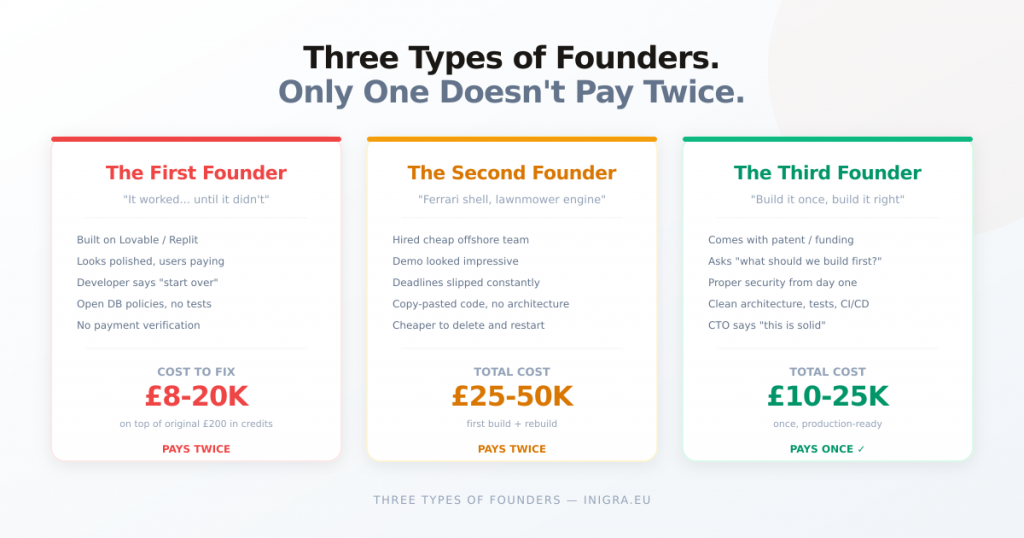
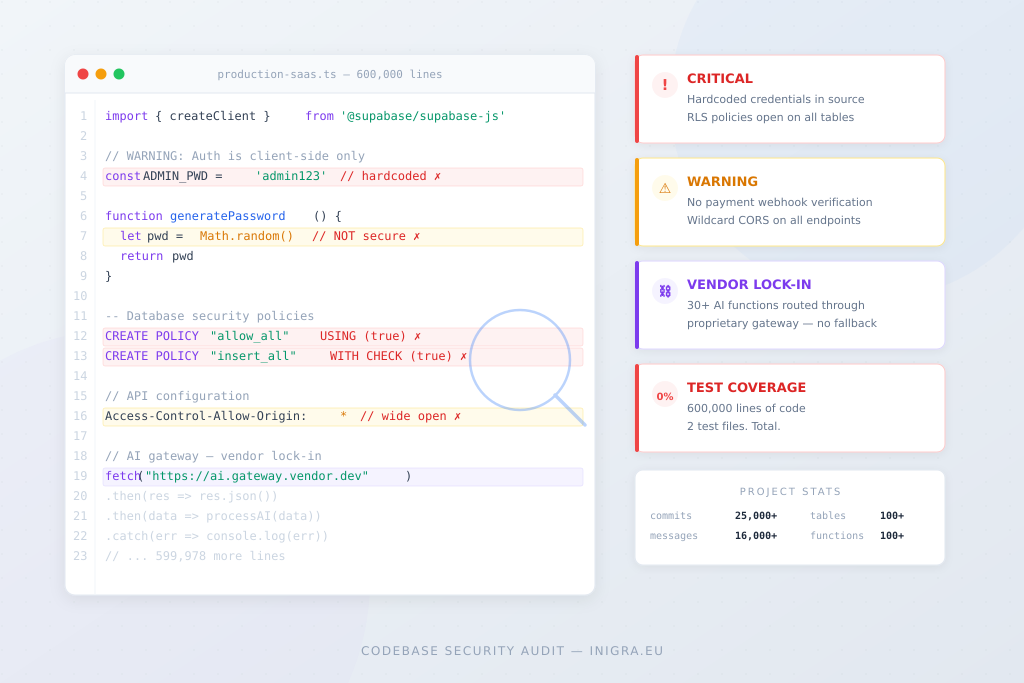
5) Choosing No-Code / AI Tools Without a “Scale Plan”
Tools like Lovable, Replit, and Bubble are powerful — but they have different limits.
Lovable is great for speed and prototyping.
Replit is great for fast development with real code.
Bubble is great for functional web MVPs without coding.
The problem happens when founders build an MVP in one tool, gain traction, and then discover:
“We need to rebuild everything to scale.”
That rebuild becomes expensive when:
-
workflows are hard to maintain
-
database logic is messy
-
performance becomes inconsistent
-
you need full backend control
✅ Fix: Decide based on your growth path
Ask early:
-
Do we need native mobile later?
-
Do we need complex integrations?
-
Do we need performance control?
-
Do we handle sensitive data (invoices, payments, client documents)?
If yes → build market-ready foundations early (even if the MVP is lean).
The Lean MVP Framework: Build Outcomes, Not Features
Instead of writing a huge feature list, scope your MVP like this:
Step 1: Define the Core Outcome
What does your product do?
Examples:
-
“Generate a report”
-
“Book a session”
-
“Submit and approve a request”
-
“Match supply and demand”
-
“Create and track an order”
Step 2: Define the Core Journey (One Flow)
Your MVP should focus on one main path:
User → action → value → result
Everything else becomes V2.
Step 3: Define MVP Quality Rules (Market-Ready Basics)
A market-ready MVP should still include:
✅ stable authentication
✅ clean data model
✅ access control
✅ production deployment
✅ basic analytics
✅ error tracking / logging
This keeps your MVP lean, but not fragile.
What a Lean Market-Ready MVP Usually Includes
For many B2B MVPs, the “right minimum” looks like this:
✅ web app (responsive)
✅ login + basic user profiles
✅ one core workflow
✅ database + admin view
✅ email notifications (basic)
✅ analytics tracking (GA4/PostHog)
✅ deploy-ready setup
That’s enough to launch and learn fast.
MVP Cost Ranges (Lean vs Market-Ready)
Founders often ask: What does “lean” actually cost?
Here’s a realistic breakdown:
Lean MVP (fast validation)
$5,000 – $25,000
-
single workflow
-
minimal roles
-
simple UI
-
low integration complexity
Market-ready MVP (best for real users + growth)
$25,000 – $70,000
-
stronger architecture
-
better data model
-
stable deployment
-
integrations + admin panel
If your MVP includes complex workflows, multiple roles, or payments from day one, costs can go above this — but the goal is to stay lean as long as possible.
The Founder Strategy That Works: Launch Lean, Then Expand
The winning approach isn’t “build everything” or “build nothing.”
It’s:
Launch the smallest product that delivers value — then improve based on real feedback.
This gives you:
-
faster validation
-
lower risk
-
better product decisions
-
a clearer roadmap for V2
Need a Realistic MVP Scope and Budget?
At Inigra (Poland-based software house) we help founders build MVPs that are:
-
lean enough to launch fast
-
stable enough for real users
-
structured enough to scale into a real product
If you want a realistic timeline and budget range for your MVP:
👉 Book a free 30-minute Discovery Call and we’ll help you define the smartest path forward.
✅ FAQ
1. Why do MVP costs increase so fast?
Because scope expands through roles, workflows, payments, and integrations that add hidden complexity.
2. What is scope creep in MVP development?
It’s the process of adding extra features during development that delays launch and increases cost.
3. Should I build my MVP with Bubble or custom code?
Bubble is great for fast validation, but custom full-stack code is better when scaling, performance, and integrations matter.
4. What makes an MVP “market-ready”?
A market-ready MVP is minimal but stable: secure login, clean database, production deployment, and a scalable foundation.
5. How much should a lean MVP cost?
Most lean MVPs range from $5,000 to $25,000, depending on complexity and scope.