
Inigra Sp. z o.o.
Office: Piekary 7, Poznań, Poland
VAT-ID: 6492316515
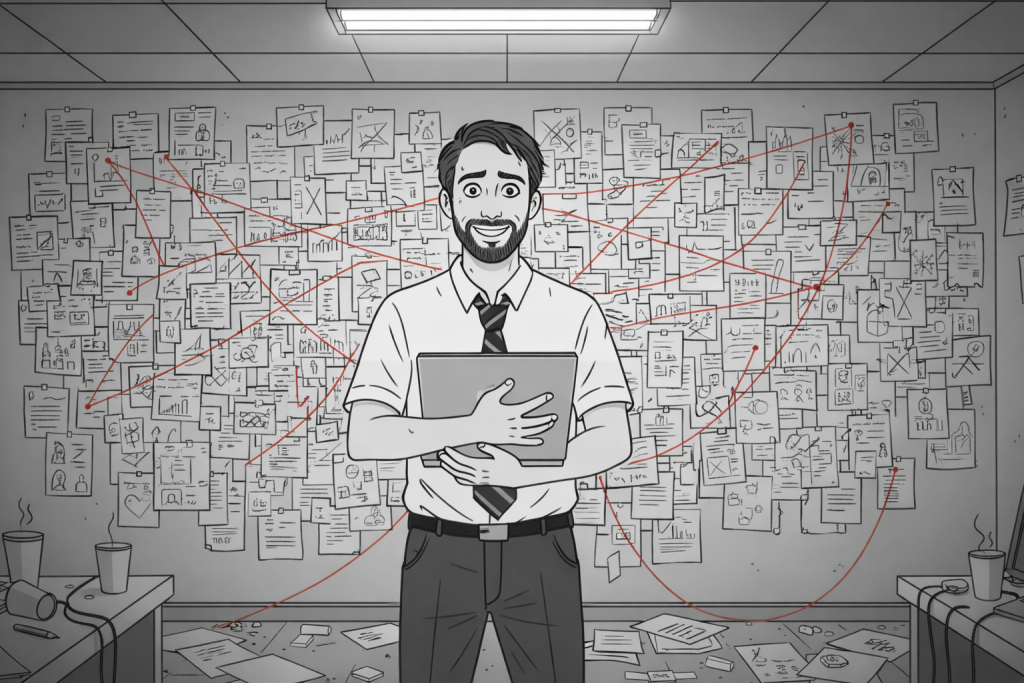
No-code tools like Lovable, Bubble, or Replit have changed how products are built.
They allow founders to validate ideas quickly, build prototypes fast, and launch without a full engineering team.
For early-stage products, that’s a huge advantage.
But sooner or later, many teams face the same question:
What happens after no-code?
At the beginning, no-code feels empowering. Everything moves fast.
Over time, founders often start noticing:
increasing complexity in workflows,
features that are hard or risky to modify,
performance issues as data grows,
rising subscription and maintenance costs,
uncertainty about scalability and long-term stability.
The product still works — but confidence drops.
This is the moment when speed becomes less important than clarity and structure.
A frequent reaction is:
“Let’s rebuild the whole thing in real code.”
In practice, this often leads to:
unnecessary rewrites,
lost product knowledge,
higher costs than expected,
repeating the same architectural mistakes.
Moving from no-code to custom development should not be a blind rewrite.
It should be a deliberate transition.
The most effective way to scale a no-code application is to slow down briefly and make informed decisions.
Not everything created in Lovable or another no-code tool is a problem.
Some logic, flows, or validated assumptions are worth keeping.
The key is understanding:
what brings real business value,
what is only a temporary workaround,
what blocks further growth.
Instead of rewriting everything:
keep what works,
refactor what’s risky,
rebuild only what limits scalability, performance, or integrations.
This reduces cost and shortens time to market.
Scalability issues usually come from architecture, not features.
A proper transition includes:
clear data models,
separation of responsibilities,
readiness for integrations (ERP, CRM, payments, analytics),
predictable performance as users and data grow.
The goal is not to recreate a no-code prototype in code.
The goal is to build a scalable MVP:
stable,
maintainable,
ready for growth,
and understandable for future developers.
No-code is not a mistake.
It’s often the smartest first step.
Problems arise when teams try to scale without rethinking structure, architecture, and ownership.
A clear transition strategy:
reduces technical debt,
keeps costs under control,
and gives founders confidence in their next decisions.
Clarity beats chaos — especially when moving beyond no-code. Book Free Discovery Call with Us.


We’ll review your idea, discuss the next steps, and suggest the best way to bring your product to life.


