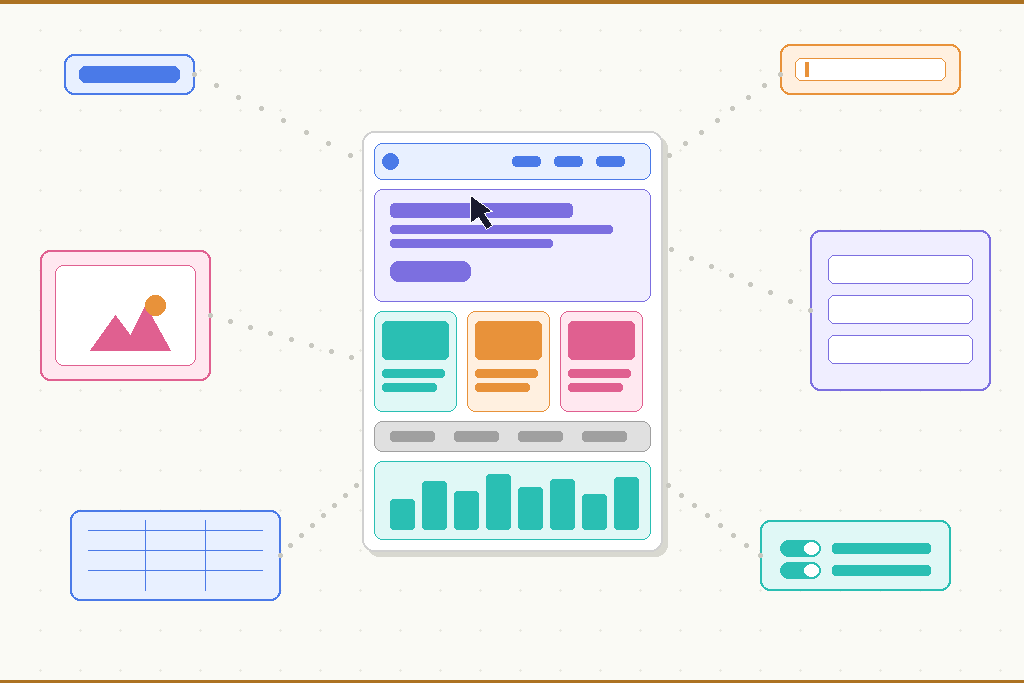
Over the past few years, thousands of founders have launched their first prototypes using AI no-code tools like Lovable, Bubble, Replit, FlutterFlow, and similar platforms. It’s fast, accessible, cheap and perfect for validating early ideas.
But there’s a problem:
no-code almost always breaks the moment you try to scale.
At Inigra Software House, most of the founders who reach out to us have the same story:
“We built our prototype in Bubble/Lovable, but now we can’t scale it, extend it or onboard real users.”
This article explains exactly when a no-code app reaches its limits, what warning signs to watch for, and how to transition into a scalable, stable MVP that can grow with your users.
Why No-Code Tools Are Perfect for Early Prototypes
No-code platforms exploded because they remove the heavy barriers of early development.
The advantages are undeniable:
-
You can launch in days, not months
-
You don’t need developers
-
Costs are low at the beginning
-
Perfect for MVPs, landing pages and simple dashboards
-
Great for validating demand before spending real money
For early testing, no-code tools are excellent.
For building a long-term product — not so much.
Where No-Code Starts Breaking Down
Once your app gets real usage, no-code limitations appear very quickly. These are the issues we see most often when clients come to us.
1. Performance Issues (Slow Pages, Lags, Freezes)
Bubble and Lovable generate a lot of hidden code and heavy workflows. As your user base grows, so does the load on the system.
Common symptoms:
-
Pages loading in 3–8 seconds
-
Inputs freezing
-
Database searches timing out
-
Mobile version glitching
-
Workflows failing randomly
This kills user experience immediately.
2. High Cost of Adding New Features
Ironically, the farther you go with no-code, the more expensive it becomes:
-
Plugins cost money
-
Advanced features require hacks
-
Workflows turn into spaghetti
-
Developers charge more because no-code is harder to extend
At some point, rebuilding is cheaper than “patching.”
3. Limited Flexibility and Customization
No-code platforms limit what you can control:
-
Backend architecture
-
Database optimisation
-
Server performance
-
Security
-
Real-time features
-
Advanced automations
-
Custom integrations
Anything beyond “simple app logic” becomes painful.
4. Vendor Lock-In
This is the biggest risk.
You can’t export your code from Lovable or Bubble.
You depend 100% on the platform.
If the platform:
-
raises prices
-
limits features
-
changes infrastructure
-
suffers downtime
Your product is stuck — with no escape route.
5. Inability to Add Complex Features
As soon as founders want anything “more advanced”, no-code hits a wall. For example:
-
Real-time notifications
-
Multi-tenant SaaS
-
Complex payment logic
-
AI features
-
Advanced dashboards
-
Messaging
-
Heavy file processing
-
Enterprise integrations
This is the moment most founders contact a software house.
6 Signs It’s Time to Move From No-Code to Custom Code
After working with hundreds of prototypes, we see the same triggers over and over again.
1) Your app slows down with real users
If 20–50 users are enough to break performance — it’s time.
2) Every new feature takes days or weeks
When development starts feeling like “fighting the platform.”
3) You hit platform limitations
If Bubble/Lovable says: “This isn’t possible,” that’s your answer.
4) You’re preparing to raise money
Investors expect scalable architecture.
5) You can’t onboard more users
Your prototype wasn’t built for real traffic.
6) You want to grow beyond a simple MVP
At this stage, no-code becomes a blocker — not a tool.
How Inigra Rebuilds No-Code Apps Into Scalable MVPs
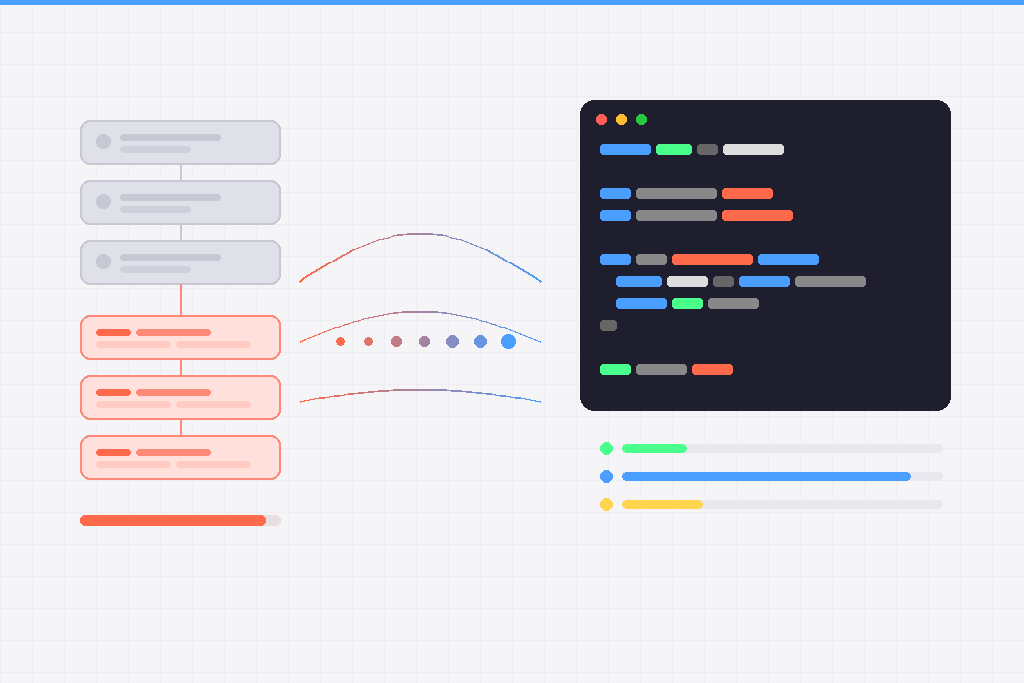
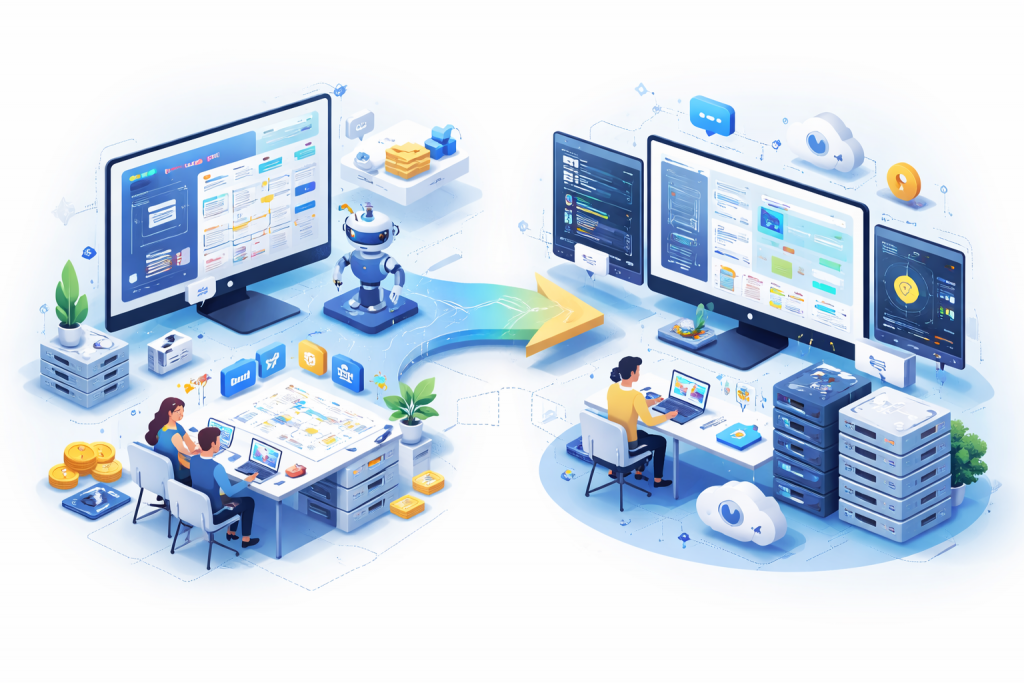
This is the exact process we use at Inigra Software House to transform fragile prototypes into stable, production-ready MVPs.
Step 1 — Technical Audit
We review everything from your no-code build:
-
screens
-
workflows
-
database
-
automations
-
API calls
-
user flows
-
bugs
-
performance
Outcome: a clear rebuild plan with full transparency.
Step 2 — UX/UI & Architecture Redesign
We prepare:
-
modern UI/UX (web + mobile)
-
scalable backend architecture
-
database schema
-
development roadmap
-
complete scope
-
user stories
You see exactly what we will build before coding starts.
Step 3 — Full-Stack Development
We rebuild your prototype using a tech stack designed for real scalability, such as:
-
Next.js / React
-
Node.js / NestJS
-
Flutter (mobile apps)
-
PostgreSQL / Firebase / Supabase
-
Google Cloud Platform
The result:
-
lightning-fast performance
-
clean infrastructure
-
easy future development
-
secure code
-
no vendor lock-in
Step 4 — QA, Testing & Launch
We handle:
-
performance tests
-
security checks
-
automated testing
-
deployment
-
maintenance
You receive a polished, stable, scalable MVP — ready for real users.
How Much Does Rebuilding Cost?
Based on our projects:
💰 Small MVP: £5,000–£10,000
💰 Medium MVP: £10,000–£20,000
💰 Advanced MVP: £20,000–£30,000+
⏱ Typical timeline: 6–10 weeks
Rebuilding is almost always cheaper than continuing on no-code.
Example Scenario (Generic)
A founder launched a Lovable prototype in 72 hours.
Great validation.
50 beta users joined.
Then:
-
load times: 6 seconds
-
workflows breaking
-
database errors
-
UI not working on mobile
-
advanced features impossible
We rebuilt the product using:
-
Next.js
-
Node.js
-
PostgreSQL
-
fully optimized UX
In 8 weeks they had:
-
12× faster performance
-
scalable architecture
-
clean, extendable components
-
stable backend
-
mobile-ready UI
This is the typical transformation.
Conclusion
No-code is excellent for launching fast — but not for growing.
If your product is gaining traction or running into limitations, rebuilding into custom code is the natural next step.
This transition doesn’t have to be slow, expensive or stressful — especially with an experienced full-stack team.
Ready to Scale Beyond No-Code?
Book a free 30-minute Discovery Call with our CTO, Paweł Reszka.
We’ll review your prototype and tell you exactly what it takes to rebuild it into a market-ready MVP.
👉 Book here:
https://calendar.app.google/EuxYZ2YtzXYMTGCq9